

Talking point: Vertical placemaking
27.02.26
Rory Olcayto
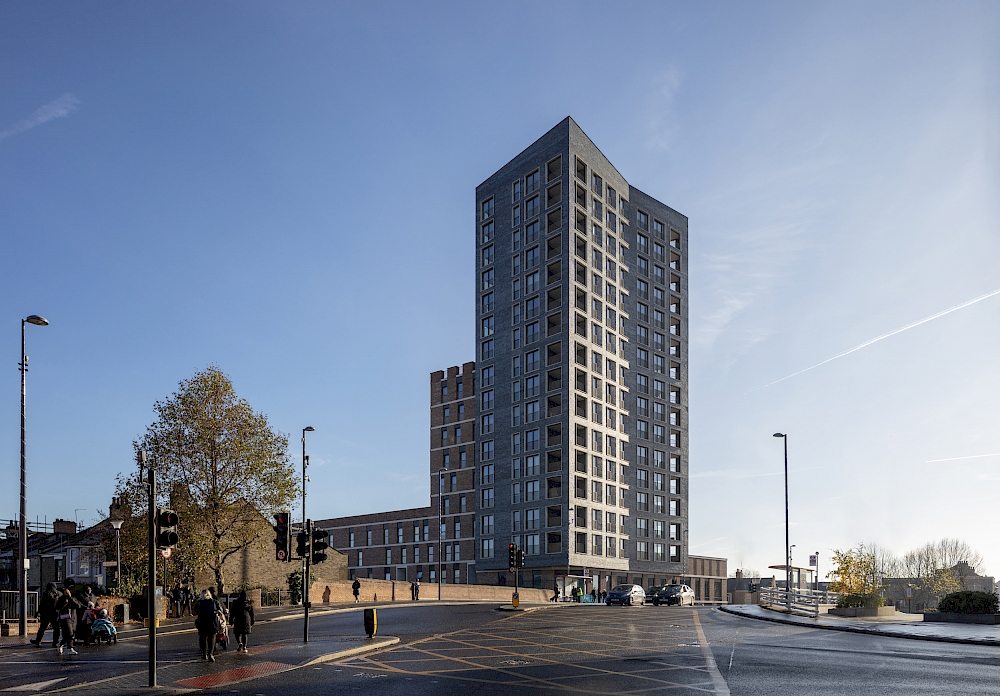
Juniper House has been on our minds this month. It’s been shortlisted for a RIBA East London Award, offering a reminder of how confidently a small, triangular site can carry a surprising amount of city. Its 91 homes, street-level university classrooms, and the winter garden and social space woven into its upper reaches show how mixed urban life can be stacked rather than spread. There’s a nursery for local kids on the plot too.
This kind of vertical placemaking is one of our ways of reading the city and several of our other projects speak the same language. Each treats height as a continuation of terrain, street life, and the colours and textures shaping east and north London. Lea Bridge, Stratford, Tottenham Hale, Walthamstow: each site has its own pressures, its own grain. We’re interested in how architecture can be tuned to these contexts, not by shrinking from height but by giving it purpose.
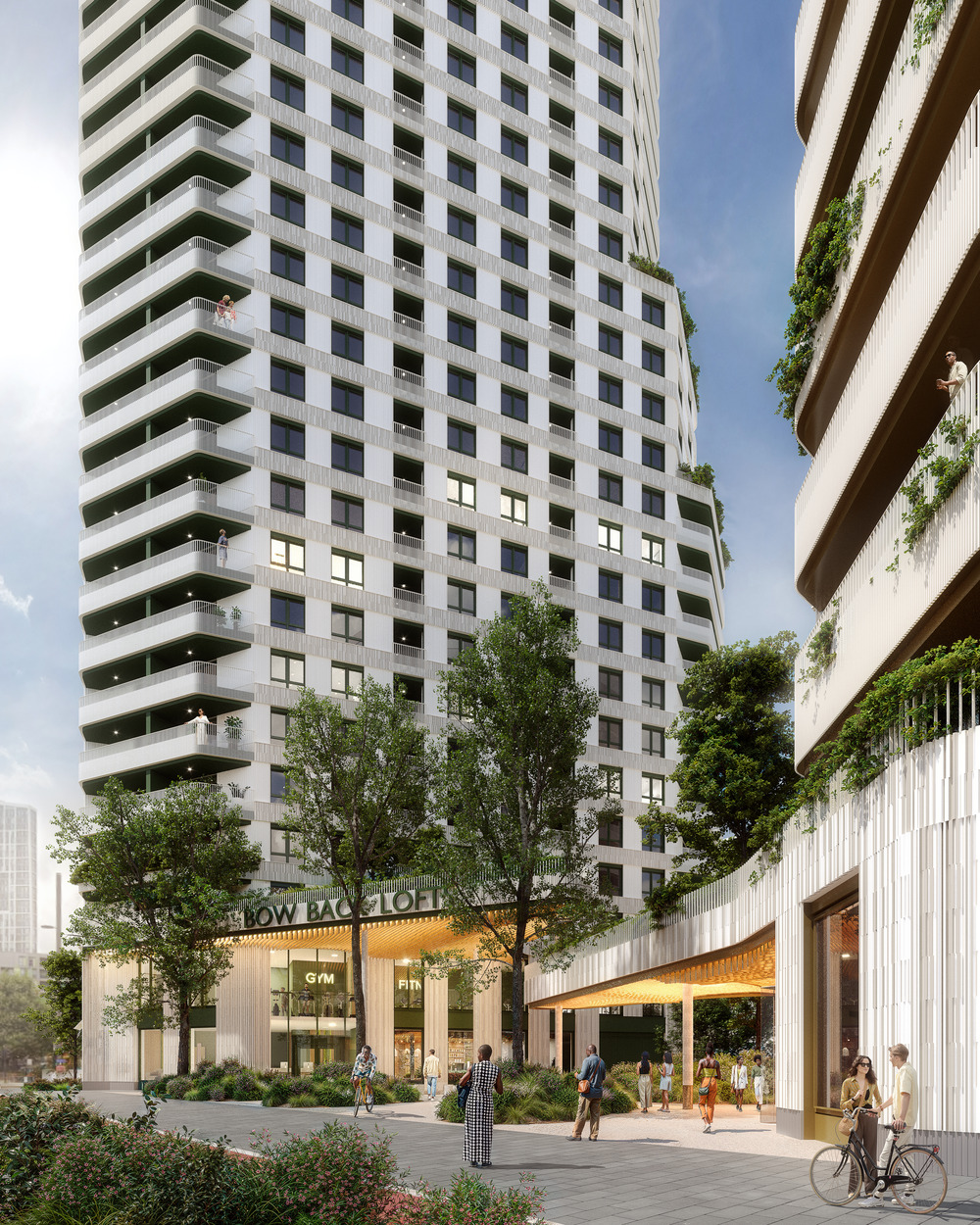
In Stratford, our 29-storey mixed‑use tower, rises from a fluvial landscape. The Bow Back Rivers set the ground logic, in an approach we fashioned with Spacehub: soft edges, blurred thresholds, movement folding into the High Street. That same reading of terrain continues upward, the façade slipping between matte and glossy bands like geological strata catching changing light.
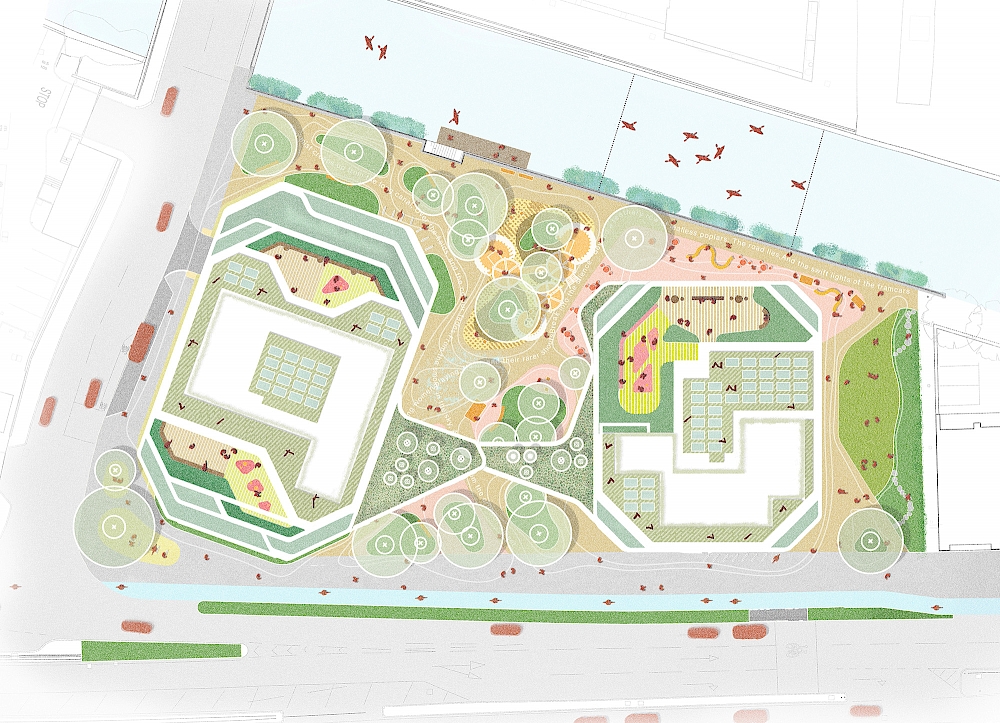
Spacehub landscape plan
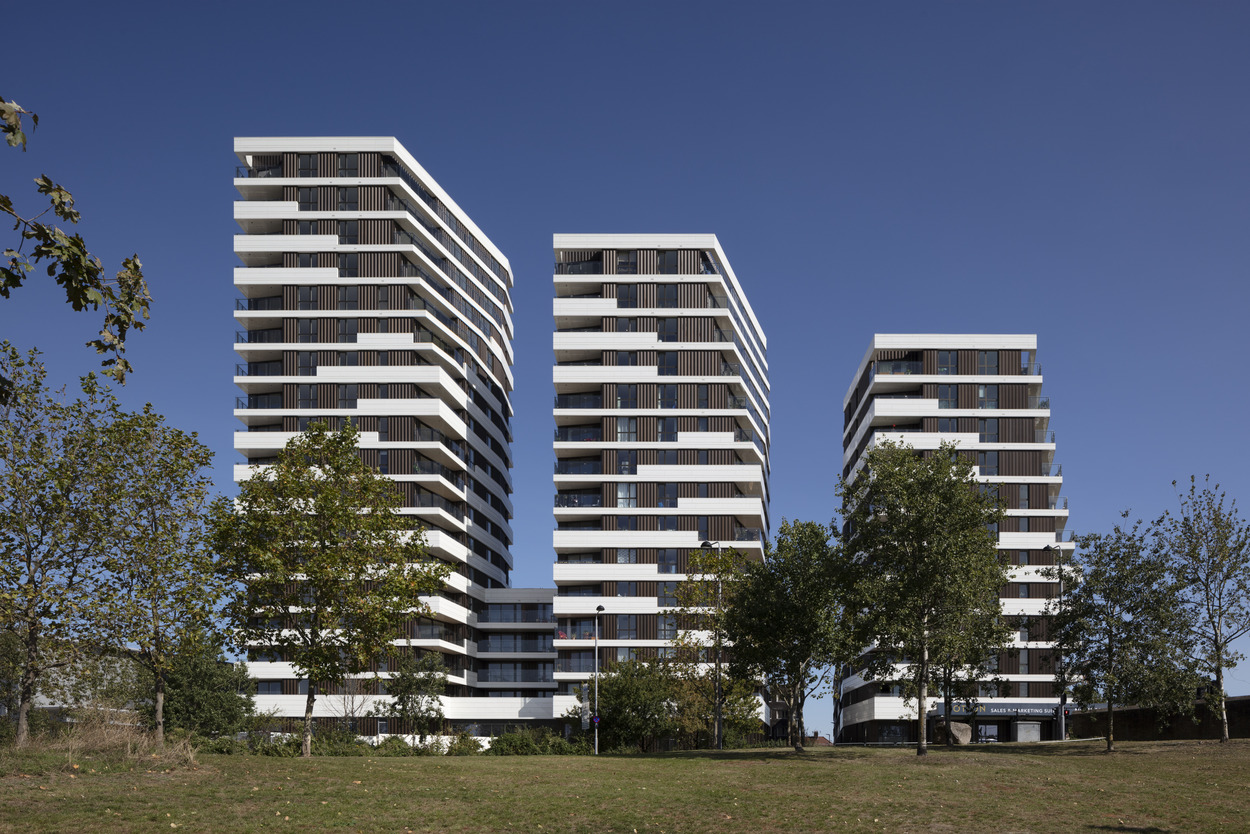
This idea - height as topography - echoes elsewhere too. At Motion, by Lea Bridge, the towers take on a mountainous character, their tapered forms, which pull light down into the courtyard and appearing as if shaped by glacial erosion.
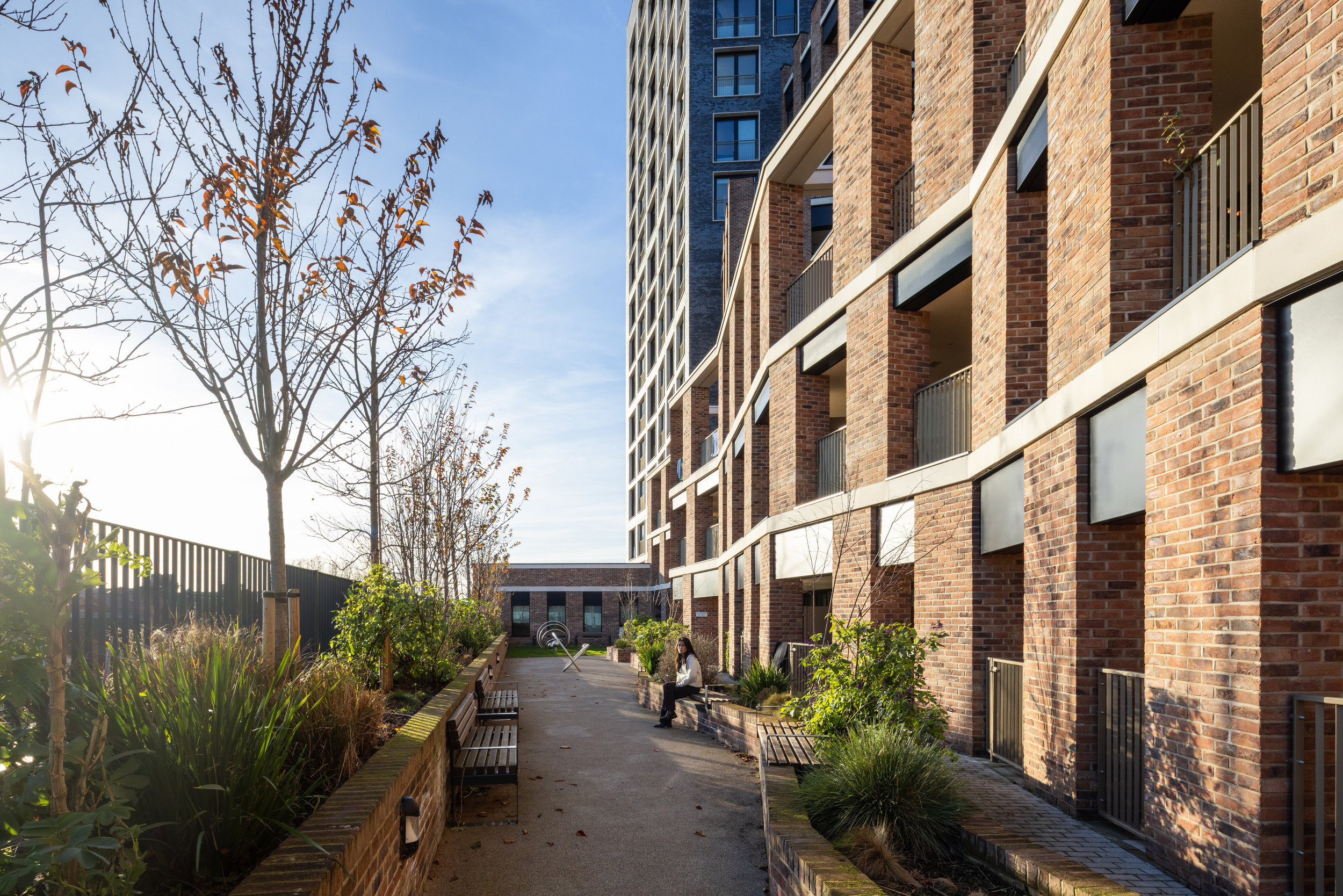
Juniper House takes another route: its tight, triangular plot beside the station forces the building to mediate between patchworked infrastructure, speculative high‑rise, and Edwardian low‑rise, producing a tower stitched into its site rather than perched on it.
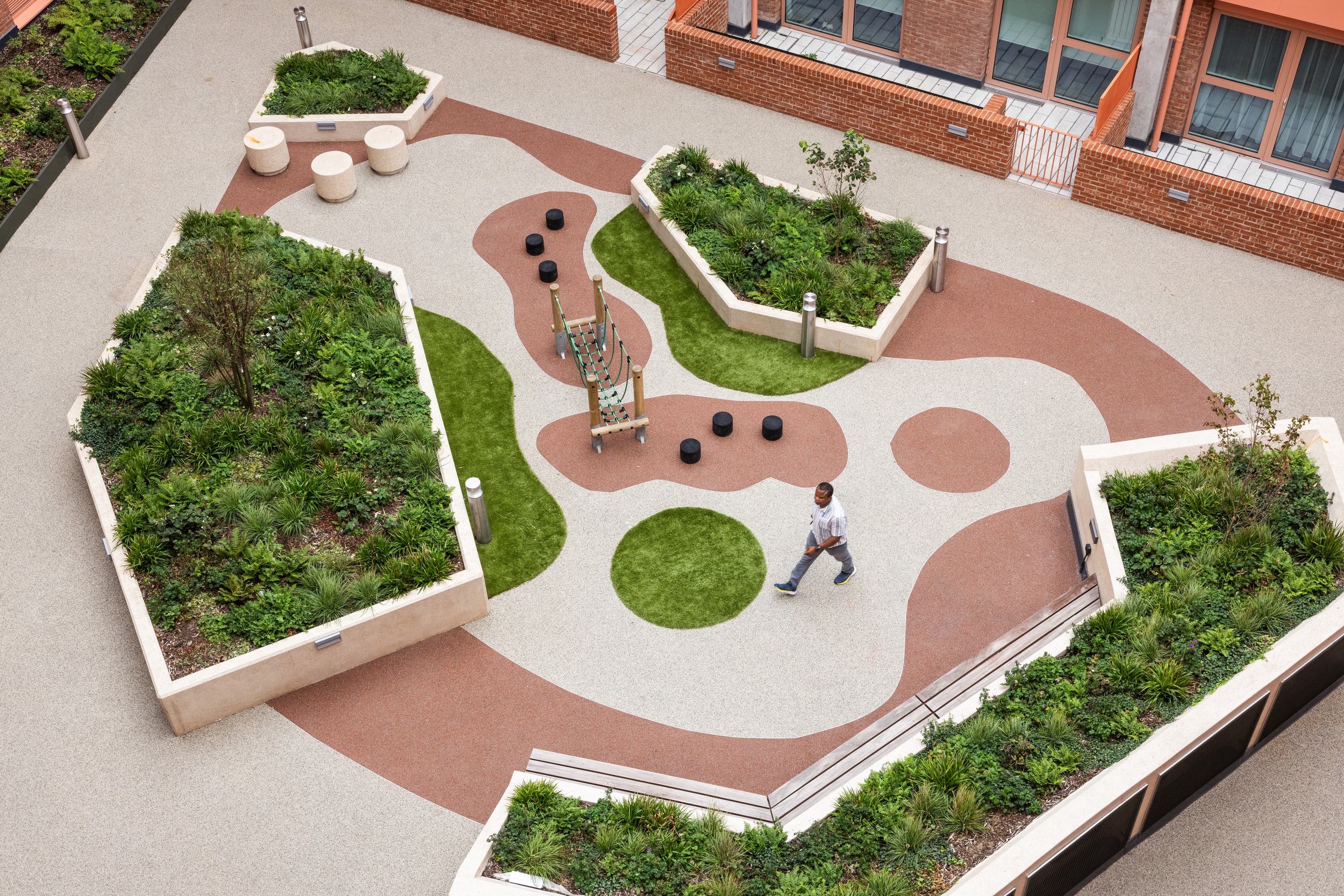
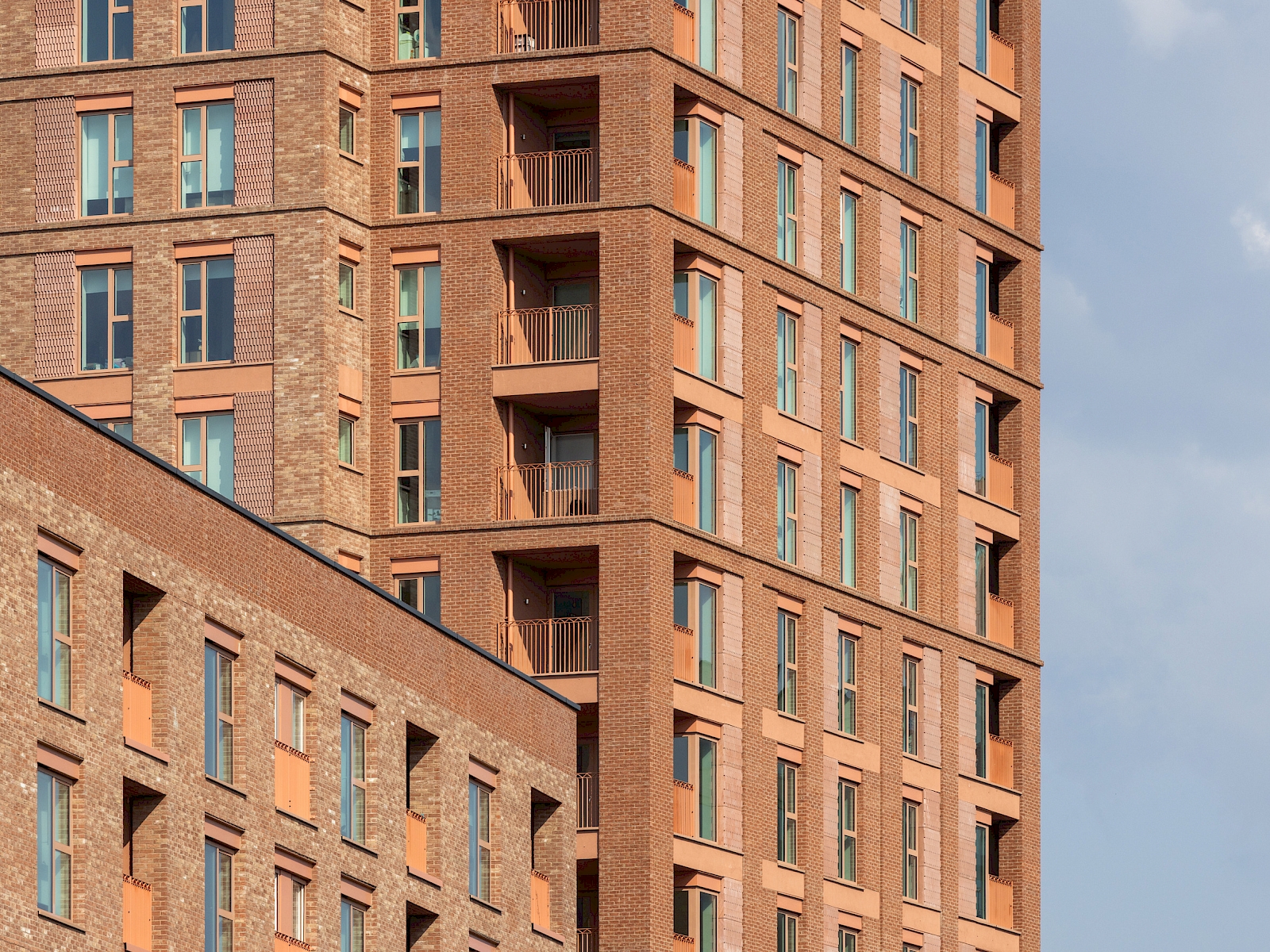
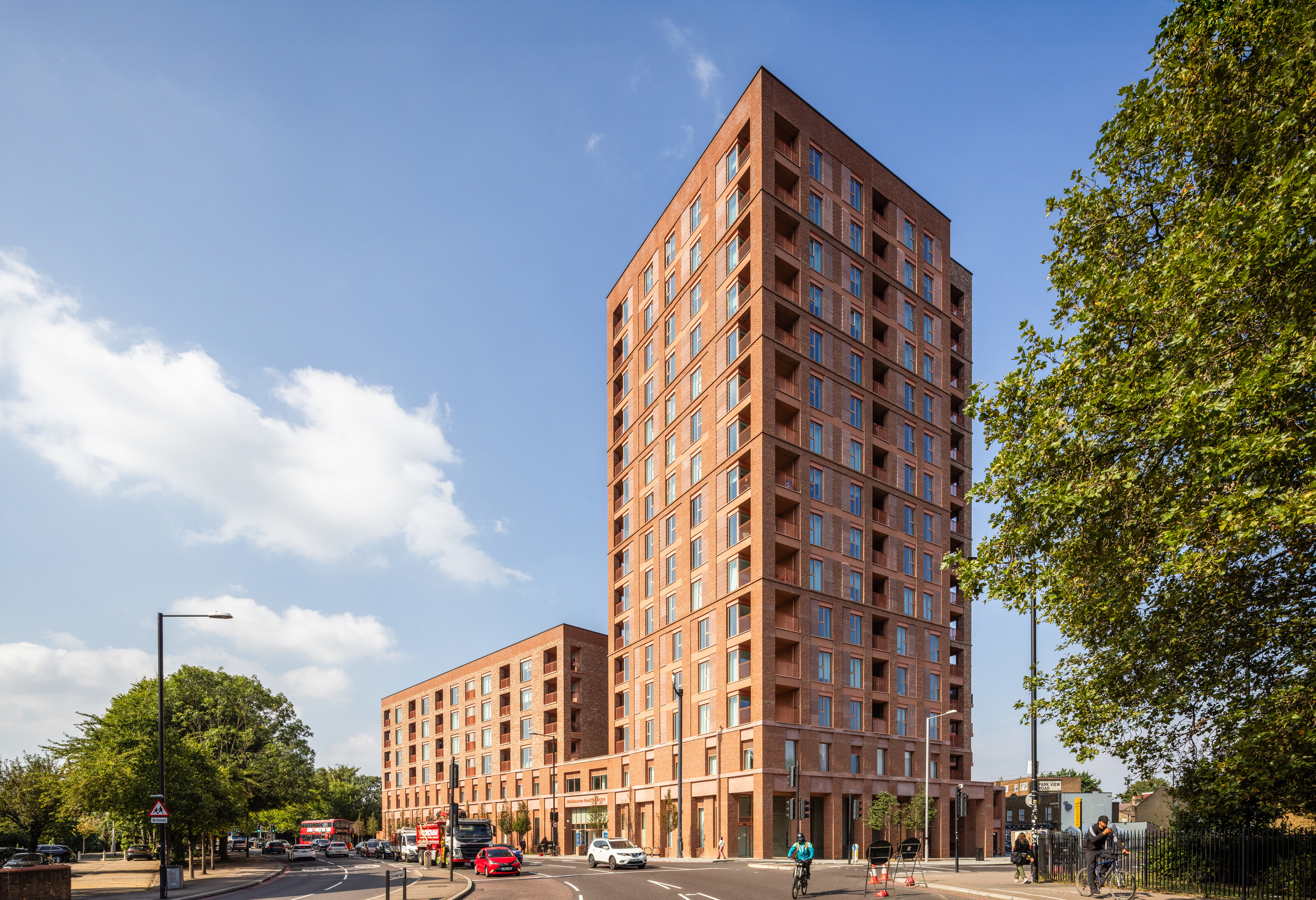
Ground level is where these projects earn their keep. Stratford uses permeability: public routes, overlapping canopies, garden approaches from street and river. Juniper House counters a once‑hostile gyratory with a pocket park and new cycle routes. Walter Tull House leans on brick, two red tones, to settle into Tottenham Hale’s older grain. Its built-in health centre and colonnade offers a sense of security and a slow promenade, both ground‑level gestures that humanise the climb. All four projects make the same argument: verticality only works when the base serves the neighbourhood.
And as they rise, each building tightens its reading of context. Walter Tull House breaks itself into three parts (a tower, a mid‑rise block, an L‑shaped quartet) and operates as an urban ecosystem calibrating parks, streets and quieter residential edges. Motion’s angled cuts work the context too, proffering an icon as a signal of renewal while Stratford’s stepping floorplates line up with city datums. Juniper House’s materials reconciles its two-faced townscape: iridescent grey brick speaks to an urban scale, red brick chimes with Walthamstow ‘village’.
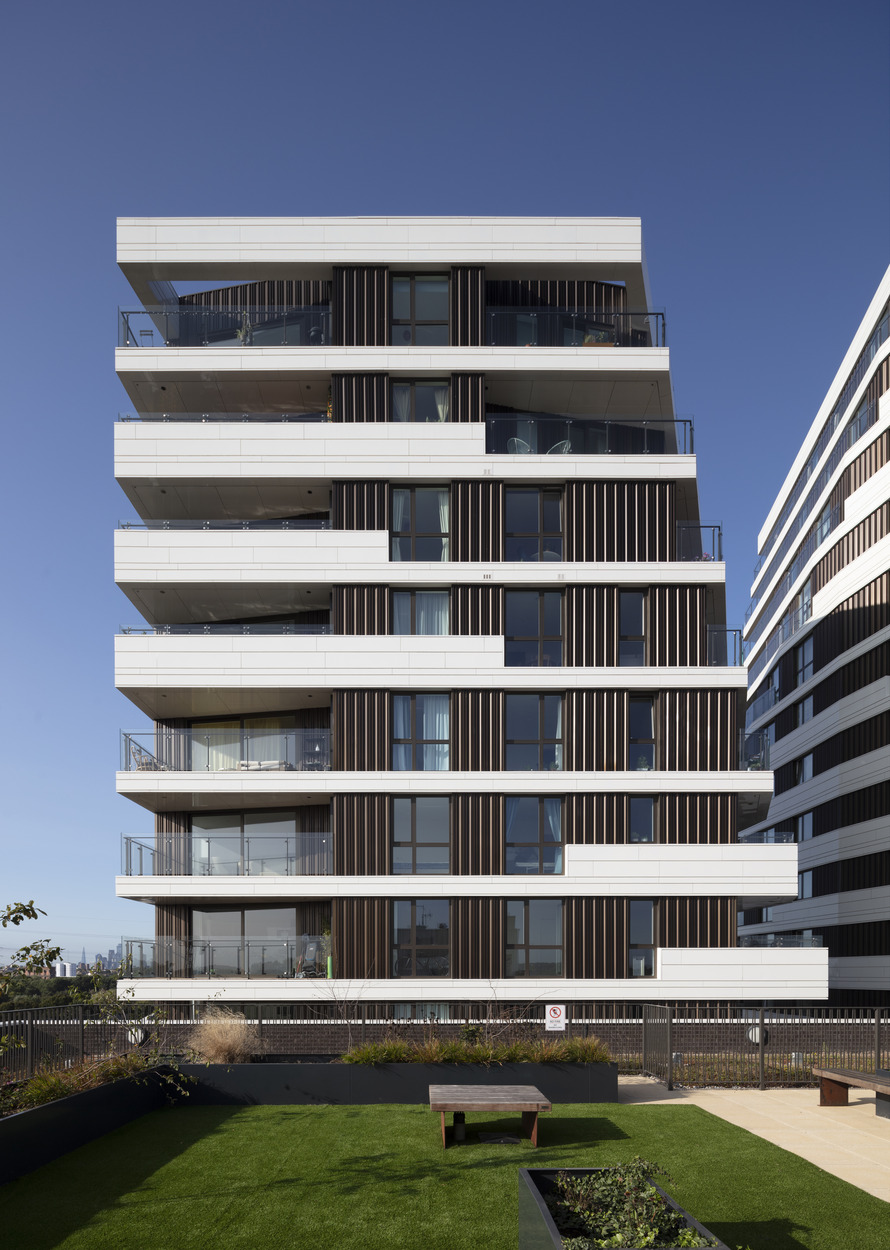
At the top of each, the vertical narrative resolves with lounges, workspaces, lookout‑like social spaces, rooftops, terraces, careful window design and deck access homes make upper storeys feel like an extension of ground‑level life.
Handled well, vertical placemaking strengthens a neighbourhood rather than simply rising above it. Let’s hope the RIBA judges recognises this quality in Juniper House.